


Brazilian side of Iguassu Falls
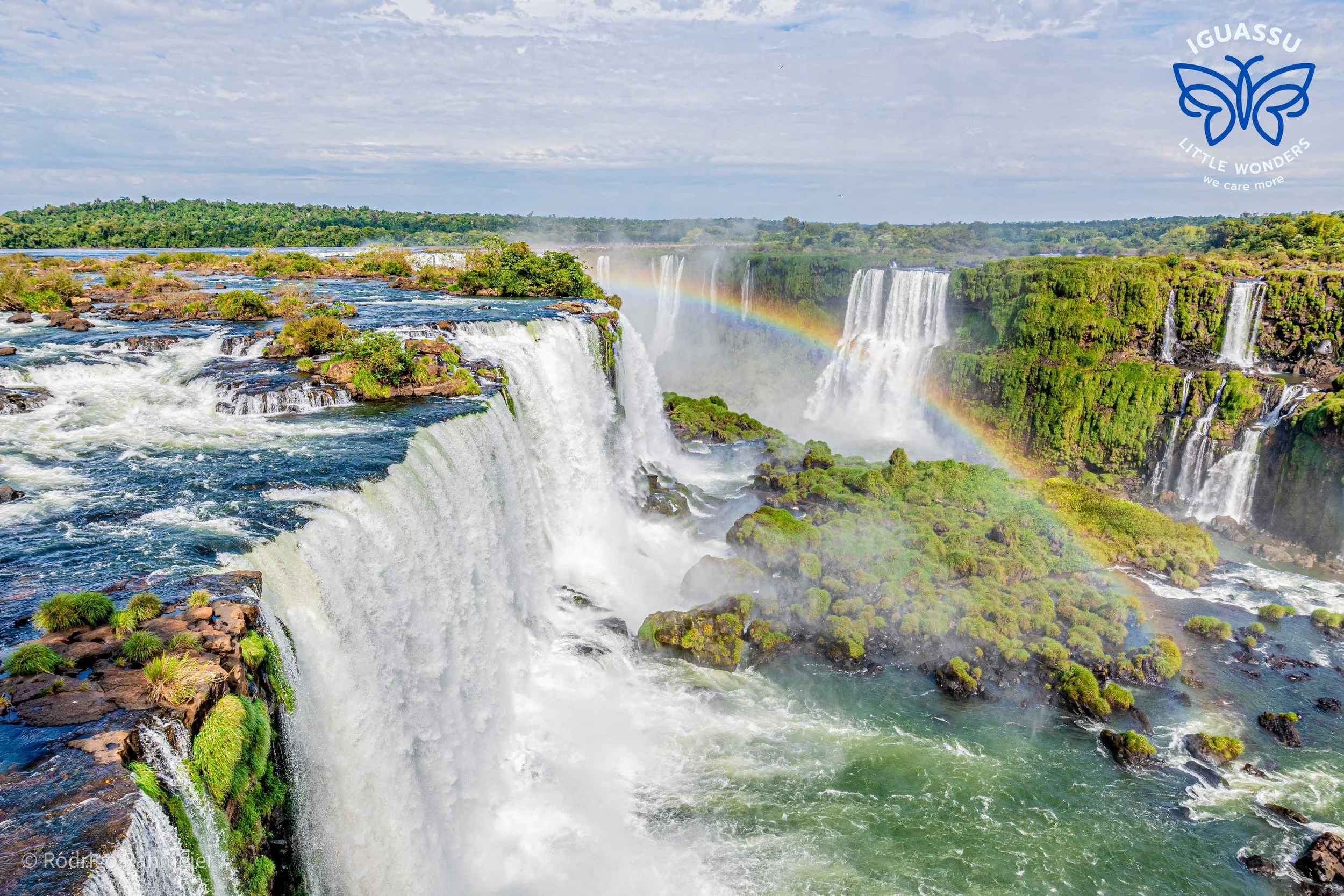
The Brazilian side takes your breath away
Getting there
The Brazilian side of Iguazu Falls sits within the Iguaçu National Park, in Foz do Iguaçu, Paraná — just five minutes from Cataratas International Airport (IGU). The airport connects directly to São Paulo and Rio de Janeiro, with onward connections to most major international hubs.

Inside the park
The National Park has its own visitor infrastructure — a well-organized Visitor's Center with English-speaking staff, dedicated park transport with departures every 20 minutes, lockers, bathrooms, a cafeteria and a souvenir shop. Entrance fees can be paid on arrival by credit card or in Brazilian Reais. Foreign currency is not accepted at the gate, so we always recommend arranging local currency or a travel card in advance — or simply letting us handle the logistics entirely.

A note on entrance fees
Park entrance prices are set by the Brazilian government and updated periodically. Rather than quoting a figure that may be out of date by the time you read this, we recommend checking current rates at the official park website — or asking us directly. When you visit with ILW, entrance fees, transport and timing are all taken care of before you arrive.
Argentine side of Iguassu Falls
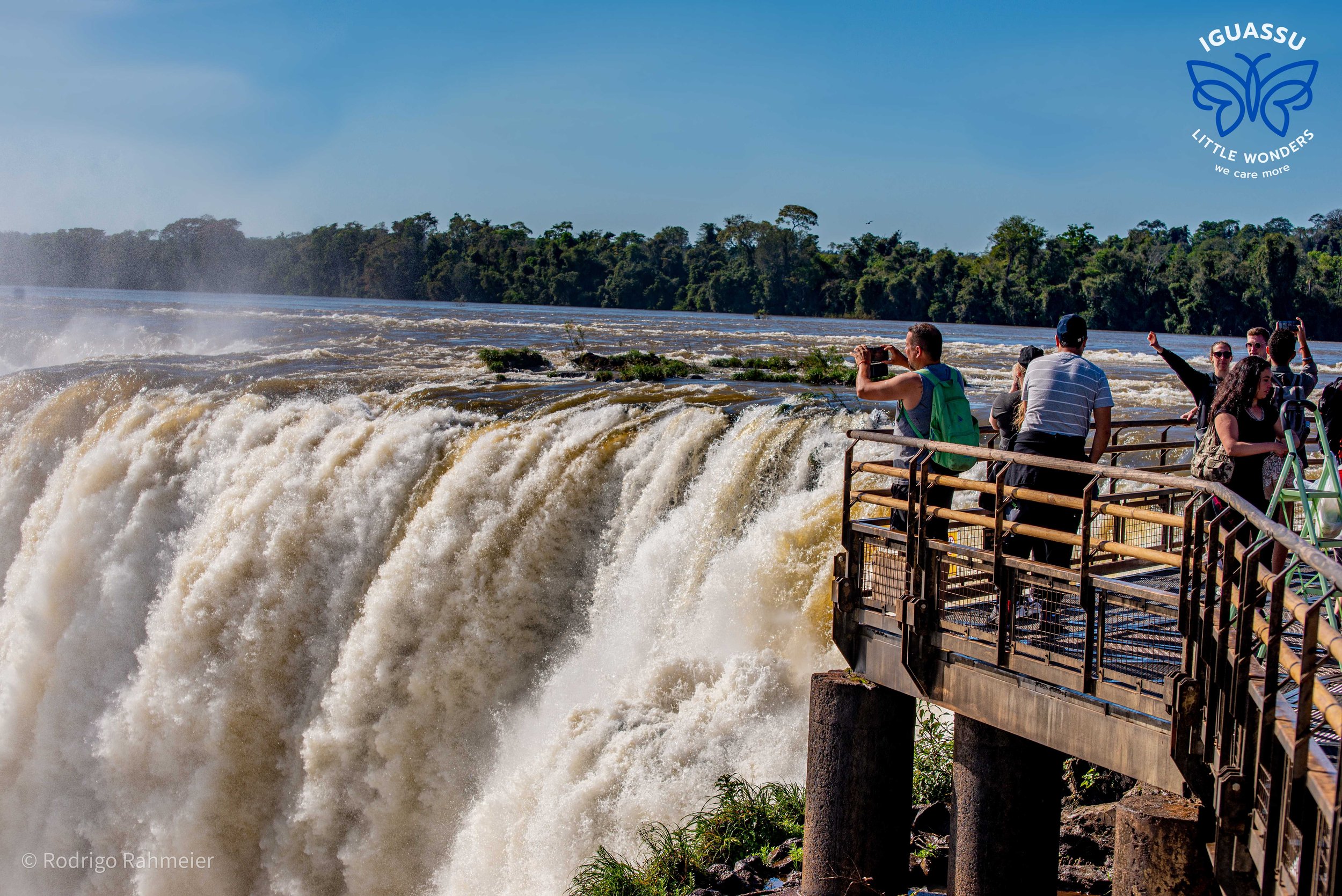
The Argentine side puts you inside it.
Getting there
The Argentine side of Iguazu Falls is located within the Iguazú National Park, in Puerto Iguazú, Misiones province — approximately 20 minutes from Puerto Iguazú International Airport (IGR). The airport operates regular connections to Buenos Aires, with onward flights to international destinations.
Inside the park
The Argentine National Park is the larger and more immersive of the two sides — and it rewards those who take their time. The Visitor's Center provides full infrastructure: lockers, bathrooms, a cafeteria and a souvenir shop. From there, the Jungle Train — a narrow-gauge railway running through the Atlantic Rainforest — departs every 30 minutes toward the Upper Circuit, Lower Circuit and the Devil's Throat viewpoint.
The trail network here is extensive. Unlike the Brazilian side, where the falls reveal themselves all at once, the Argentine side builds — circuit by circuit, viewpoint by viewpoint — until you arrive at the edge of the Devil's Throat and understand, finally, the full scale of what you came to see.
A note on entrance fees and currency
The Argentine National Park accepts credit cards, though the process at the gate can be slow during peak hours. Argentine Pesos are faster and simpler — and given the volatility of the Argentine Peso exchange rate, we recommend checking current rates close to your travel date rather than relying on any figure quoted here.
When you visit with ILW, entrance fees, currency logistics and park timing are arranged in advance — so your clients walk through the gate without stopping at a queue or searching for change.

What is the best side of Iguassu Falls?
There is no best side. There is only the right side for you.
This is one of the most common questions we receive — and one of the most important ones to answer honestly.
Geographically, approximately 75% of Iguazu Falls sits on the Argentine side. But geography alone does not determine where you should go first, how long you should stay, or which experience will stay with you longest. That depends on something far more personal.

It depends on your context
How many days do you have? What time does your flight arrive — and leave? Are you travelling for leisure or combining the falls with a business trip? Do you hold a visa for both Brazil and Argentina, or only one? A traveller with a single afternoon and an early morning departure has a very different visit ahead of them than someone with two full days and no agenda.
These are the questions we ask before we recommend anything. Not because we want to complicate a simple decision — but because the right answer genuinely depends on the answers.

It depends on who you are
The Argentine side is larger, more immersive and more physically demanding. Its trail network covers several kilometres across uneven terrain, with stairs, slopes and surfaces that require a reasonable level of mobility. For most travellers, this is not an issue — and the reward is extraordinary. But for those travelling with young children, older family members, or anyone with knee, back or mobility considerations, the Brazilian side offers the same wonder with considerably less physical demand.
The same logic applies to your emotional expectations. Travellers who want to feel inside the falls — overwhelmed, soaked, surrounded — tend to find their moment on the Argentine side. Those who want to witness the falls — to stand back and take in the full, panoramic scale of what nature built here — often find their most powerful memory on the Brazilian side.
As we like to say: if Argentina has most of the falls, Brazil has most of the views.
Our recommendation:
See both. One side per day, ideally in sequence — Argentine first, Brazilian second, so that the panorama becomes the final frame. If time allows only one, tell us who is coming, how long you have, and what matters most. We will tell you exactly where to go — and why.
That is what we are here for.